


[2025] Get Top-Rated CIPS L6M2 Exam Dumps Now
Passing Key To Getting L6M2 Certified Exam Engine PDF
NEW QUESTION # 10
SIMULATION
Evaluate the following approaches to supply chain management: the Business Excellence Model, Top-Down Management Approach and Six Sigma
Answer:
Explanation:
Evaluation of Approaches to Supply Chain Management
Introduction
Effective supply chain management (SCM) is critical for organizations to enhance efficiency, reduce costs, and improve customer satisfaction. Various management approaches help organizations optimize their supply chain performance. Three widely recognized approaches include:
Business Excellence Model (BEM) - A framework for continuous improvement.
Top-Down Management Approach - A hierarchical decision-making structure.
Six Sigma - A data-driven methodology for process improvement.
Each approach has strengths and limitations when applied to supply chain management.
1. Business Excellence Model (BEM) in Supply Chain Management
Explanation:
The Business Excellence Model (BEM) is a holistic framework used to assess and improve business performance. The European Foundation for Quality Management (EFQM) Excellence Model is one of the most common BEM frameworks.
It focuses on 9 key criteria: Leadership, Strategy, People, Partnerships & Resources, Processes, Customer Results, People Results, Society Results, and Business Performance.
Application in Supply Chain Management
✅ Encourages continuous improvement in supplier relationships and logistics.
✅ Focuses on customer-centric supply chain strategies.
✅ Promotes collaboration with suppliers and stakeholders to optimize efficiency.
Example: Toyota's Lean Supply Chain follows BEM principles to maintain supplier partnerships and quality improvement.
Evaluation
✅ Advantages
Provides a structured framework for evaluating supply chain performance.
Enhances collaboration between internal teams and external suppliers.
Focuses on quality management and customer satisfaction.
❌ Limitations
Can be complex and resource-intensive to implement.
Requires cultural change and strong leadership commitment.
2. Top-Down Management Approach in Supply Chain Management
Explanation:
The Top-Down Management Approach follows a hierarchical structure where decisions are made by senior management and communicated downward. This approach ensures centralized decision-making and strong leadership control.
Application in Supply Chain Management
✅ Ensures consistency in supply chain policies and strategic direction.
✅ Facilitates quick decision-making in procurement and logistics.
✅ Helps maintain compliance with regulatory standards and corporate policies.
Example: Amazon's Supply Chain Strategy is largely top-down, with executives making key strategic decisions on warehousing, delivery, and automation.
Evaluation
✅ Advantages
Ensures strong leadership direction in supply chain management.
Reduces confusion in decision-making by maintaining clear authority.
Useful for large-scale global supply chains that need standardization.
❌ Limitations
Can be rigid and slow to adapt to changing supply chain disruptions.
May reduce innovation and employee engagement in problem-solving.
Less effective in dynamic, fast-changing industries.
3. Six Sigma in Supply Chain Management
Explanation:
Six Sigma is a data-driven methodology aimed at reducing defects and improving quality. It follows the DMAIC cycle (Define, Measure, Analyze, Improve, Control) to enhance process efficiency and minimize errors.
Application in Supply Chain Management
✅ Helps identify waste and inefficiencies in supply chain processes.
✅ Reduces defects and errors in procurement, logistics, and inventory management.
✅ Enhances supplier performance evaluation through data analysis.
Example: General Electric (GE) used Six Sigma to improve supply chain efficiency, reducing defects and operational costs.
Evaluation
✅ Advantages
Reduces supply chain disruptions by improving process reliability.
Uses data-driven decision-making for procurement and logistics.
Improves supplier quality management.
❌ Limitations
Requires intensive training and certification (Black Belt, Green Belt, etc.).
Can be too rigid for industries requiring flexibility and innovation.
Implementation may be costly and time-consuming.
Conclusion
Each approach offers unique benefits for supply chain management:
BEM ensures a holistic, continuous improvement framework for supply chains.
Top-Down Management provides strong leadership direction and centralized decision-making.
Six Sigma improves process quality and operational efficiency.
Organizations should combine these approaches based on their business model, industry requirements, and strategic goals to optimize supply chain performance.
NEW QUESTION # 11
SIMULATION
XYZ is a large technology organisation which has used an aggressive growth strategy to become the market leader. It frequently buys out smaller firms to add to its increasing portfolio of businesses. How could XYZ use the Kachru Parenting Matrix to assist in decision making regarding future investments?
Answer:
Explanation:
Using the Kachru Parenting Matrix for XYZ's Investment Decisions
Introduction
The Kachru Parenting Matrix is a strategic decision-making tool that helps businesses evaluate how well a parent company can add value to its subsidiaries. For XYZ, a large technology firm that follows an aggressive acquisition strategy, the Kachru Parenting Matrix can guide investment decisions by assessing the synergy between the parent company (XYZ) and its acquired businesses.
By using this matrix, XYZ can determine which acquisitions will benefit from its expertise, resources, and management style, ensuring maximum strategic alignment and value creation.
1. Explanation of the Kachru Parenting Matrix
The Kachru Parenting Matrix evaluates business units based on:
Business Unit Fit - How well the subsidiary aligns with the parent company's core capabilities and expertise.
Parenting Advantage - The ability of the parent company to add value to the subsidiary through strategic oversight, resources, and expertise.
It categorizes business units into four quadrants, influencing investment decisions:
| Parenting Advantage →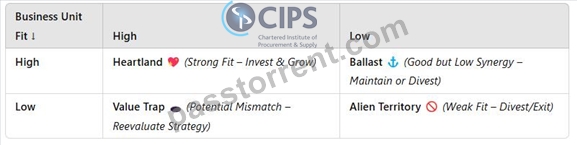
2. How XYZ Can Use the Kachru Parenting Matrix for Investment Decisions
1. Identifying Core Growth Areas - Heartland Businesses (Invest & Grow) These businesses strongly align with XYZ's expertise and benefit from its technology, resources, and leadership.
XYZ should prioritize investment, innovation, and expansion in these areas.
Example: If XYZ specializes in AI and cloud computing, acquiring smaller AI startups would fall into the Heartland category, ensuring seamless integration and value creation.
✅ Strategic Action: Invest in R&D, talent acquisition, and global expansion for these subsidiaries.
2. Maintaining Complementary Businesses - Ballast Businesses ⚓ (Maintain or Divest if Needed) These businesses are profitable but do not directly fit XYZ's core strategy.
XYZ can keep them for financial stability or sell them if they drain management resources.
Example: If XYZ acquires a hardware company but primarily operates in software, the hardware unit may not fully align with its expertise.
✅ Strategic Action: Maintain for profitability or sell if it becomes a burden.
3. Avoiding Value Draining Investments - Value Trap Businesses (Reevaluate or Divest) These businesses seem promising but struggle under XYZ's management approach.
They may require too much intervention, reducing overall profitability.
Example: If XYZ buys a social media company but lacks the right expertise to monetize it effectively, it becomes a value trap.
✅ Strategic Action: Reevaluate if restructuring is possible; otherwise, sell to avoid financial losses.
4. Exiting Poorly Aligned Businesses - Alien Territory (Divest Immediately) These businesses do not align at all with XYZ's strategy or expertise.
Keeping them leads to resource misallocation and inefficiencies.
Example: If XYZ acquires a retail clothing company, it would be in Alien Territory, as it does not fit within the technology industry.
✅ Strategic Action: Divest or spin off these businesses to focus on core competencies.
3. Strategic Benefits of Using the Kachru Parenting Matrix
✅ Improves Investment Focus - Helps XYZ identify the most valuable acquisitions.
✅ Enhances Synergy & Value Creation - Ensures subsidiaries benefit from XYZ's resources and leadership.
✅ Prevents Poor Acquisitions - Avoids wasting capital on unrelated businesses.
✅ Optimizes Portfolio Management - Balances high-growth and stable revenue businesses.
4. Conclusion
The Kachru Parenting Matrix is a critical tool for XYZ to assess future acquisitions, ensuring that each business unit contributes to long-term profitability and strategic alignment.
✅ Heartland businesses should receive maximum investment.
✅ Ballast businesses can be maintained for financial stability.
✅ Value Trap businesses should be reevaluated or restructured.
✅ Alien Territory businesses must be divested to avoid inefficiencies.
By using this framework, XYZ can ensure smarter, more strategic acquisitions, maintaining its market leadership while avoiding financial risks.
NEW QUESTION # 12
SIMULATION
XYZ is a large manufacturing organisation which employs 200 skilled staff in its factory in Bolton. It has a large global supply chain with raw materials sourced from Asia and Africa. Discuss five areas of policy that can affect the people working in the supply chain
Answer:
Explanation:
Five Areas of Policy Affecting People in the Supply Chain - XYZ Manufacturing Introduction A global supply chain involves multiple stakeholders, including suppliers, logistics providers, and factory workers. Policies at corporate, national, and international levels impact the working conditions, rights, and well-being of people within the supply chain.
For XYZ, a large manufacturing company with a factory in Bolton and suppliers in Asia and Africa, key policy areas affecting its workforce and supply chain workers include labor rights, health and safety, wages, environmental regulations, and ethical sourcing.
1. Labor Laws and Workers' Rights Policies
Policies related to employment laws, working hours, and fair treatment impact supply chain workers' rights.
✅ Key Areas of Impact
Child labor and forced labor laws ensure ethical sourcing.
Working hours and overtime regulations prevent worker exploitation.
Freedom of association (e.g., the right to join trade unions) allows collective bargaining.
Example: The International Labour Organization (ILO) conventions set global labor standards, influencing suppliers in Asia and Africa.
✅ Impact on XYZ
Must audit suppliers to ensure compliance with fair labor policies.
Risk of reputational damage if suppliers engage in unethical labor practices.
2. Health and Safety Regulations
Policies ensuring safe working conditions in manufacturing and supply chain operations protect employees from hazards.
✅ Key Areas of Impact
Workplace safety (e.g., protective equipment, fire prevention, accident reporting).
Factory compliance with OSHA (Occupational Safety and Health Administration) standards.
COVID-19 and pandemic-related health protocols in global supply chains.
Example: Bangladesh's Rana Plaza factory collapse (2013) highlighted the dangers of weak safety regulations, prompting global reforms in factory safety policies.
✅ Impact on XYZ
Needs to conduct supplier audits to ensure compliance with safety laws.
May need to invest in better safety training for factory workers in Bolton.
3. Wages and Fair Pay Policies
Regulations and policies on minimum wages, equal pay, and fair compensation influence worker conditions in global supply chains.
✅ Key Areas of Impact
Minimum wage laws in supplier countries affect labor costs.
Fair pay policies ensure workers are not underpaid or exploited.
Gender pay equity promotes inclusive employment practices.
Example: The UK's National Minimum Wage ensures fair pay, but wages in Asia and Africa may be significantly lower.
✅ Impact on XYZ
Needs to ensure suppliers pay living wages to avoid reputational risks.
Could face supply chain disruptions if wage disputes lead to strikes or protests.
4. Environmental and Sustainability Policies
Environmental policies regulate how businesses source raw materials, manage waste, and reduce carbon emissions.
✅ Key Areas of Impact
Deforestation and raw material sourcing laws (e.g., FSC-certified timber, conflict minerals regulations).
Carbon emissions policies affect logistics and transportation.
Waste disposal and pollution regulations impact factory operations.
Example: The EU's Carbon Border Adjustment Mechanism (CBAM) affects importers sourcing from high-carbon-emitting regions.
✅ Impact on XYZ
Must ensure suppliers meet environmental standards to avoid legal penalties.
Needs to reduce carbon footprint by choosing sustainable transport and materials.
5. Ethical Sourcing and Corporate Social Responsibility (CSR) Policies
Ethical sourcing policies ensure companies buy from responsible suppliers that uphold human rights and environmental protection.
✅ Key Areas of Impact
Modern Slavery Act (UK, 2015) requires firms to report on anti-slavery efforts.
Fairtrade and ethical certification policies ensure responsible supply chain practices.
CSR commitments require businesses to engage in community welfare programs.
Example: Nestlé has an Ethical Sourcing Program for cocoa, ensuring child labor-free supply chains.
✅ Impact on XYZ
Needs to conduct supplier due diligence to comply with ethical sourcing laws.
Ethical policies can enhance brand reputation and customer trust.
Conclusion
Policies on labor rights, health and safety, fair wages, environmental sustainability, and ethical sourcing directly impact people working in XYZ's supply chain. To ensure compliance, XYZ must adopt robust supplier audits, transparent reporting, and ethical business practices to protect workers' rights while maintaining a resilient and responsible supply chain.
NEW QUESTION # 13
SIMULATION
Analyse the GE McKinsey Matrix as a tool to influence directional policy
Answer:
Explanation:
Analysis of the GE McKinsey Matrix as a Tool to Influence Directional Policy Introduction The GE McKinsey Matrix is a strategic tool used by businesses to prioritize investments, allocate resources, and influence directional policy. It expands on the BCG Matrix by evaluating business units or product portfolios based on two dimensions:
Industry Attractiveness (external factors such as market growth, competition, and profitability).
Business Unit Strength (internal factors such as brand strength, financial performance, and operational efficiency).
The matrix helps organizations decide where to invest, grow, or divest, making it a valuable tool for influencing long-term strategic direction.
1. Explanation of the GE McKinsey Matrix
The GE McKinsey Matrix categorizes business units into nine strategic zones, guiding investment decisions:
| Industry Attractiveness →
Example:
Apple's iPhone (High Industry, Strong Business Unit) → Invest & Grow
Microsoft's Bing Search Engine (Low Industry, Weak Business Unit) → Divest or Harvest ❌
2. How the GE McKinsey Matrix Influences Directional Policy
1. Investment Prioritization
✅ Identifies which business units deserve more investment.
✅ Helps companies allocate resources to high-potential markets.
Example: Amazon invests heavily in AWS (Cloud Computing) due to high industry growth and strong business positioning.
2. Market Entry and Expansion Decisions
✅ Assists in geographical and market expansion decisions.
✅ Helps assess whether to enter emerging industries.
Example: Tesla entered renewable energy (solar panels, batteries) due to high industry potential.
3. Strategic Exit or Divestment Decisions
✅ Identifies low-performing divisions that should be divested.
✅ Prevents financial losses by exiting declining markets.
Example: GE sold its financial services division (GE Capital) to refocus on industrial manufacturing.
4. Balancing Risk and Portfolio Diversification
✅ Encourages a balanced portfolio of high-growth and stable businesses.
✅ Ensures companies avoid over-reliance on a single product or market.
Example: Google (Alphabet) maintains a diverse portfolio of AI, search, and cloud businesses to balance risk.
3. Advantages and Limitations of the GE McKinsey Matrix
✅ Advantages
✔ More detailed than the BCG Matrix - Considers multiple industry and business factors.
✔ Helps with long-term strategic planning - Guides investment, expansion, and divestment.
✔ Balances risk and growth - Prevents over-reliance on a single revenue source.
❌ Limitations
✖ Subjective analysis - Industry attractiveness and business strength are difficult to quantify.
✖ Complex implementation - Requires detailed data collection and industry research.
✖ No direct action plan - Only provides guidance on resource allocation, not execution strategies.
4. Conclusion
The GE McKinsey Matrix is a powerful tool for influencing directional policy by helping companies prioritize investments, expand into attractive markets, and exit underperforming businesses. However, it should be used alongside financial analysis and market research to ensure strategic success.
NEW QUESTION # 14
SIMULATION
Why is it important for an organisation to measure performance? Describe one tool that can be used to measure performance
Answer:
Explanation:
Importance of Measuring Performance & Performance Measurement Tool
Introduction
Performance measurement is essential for organizations to evaluate their efficiency, effectiveness, and strategic success. It provides quantifiable insights into business operations, helping companies make data-driven decisions, improve productivity, and maintain competitive advantage.
To achieve this, organizations use various performance measurement tools. One widely used tool is the Balanced Scorecard (BSC), which provides a holistic approach to measuring performance across different business areas.
1. Importance of Measuring Performance
Organizations must measure performance to achieve the following benefits:
1.1 Supports Strategic Decision-Making
✅ Helps businesses align operations with strategic goals.
✅ Identifies areas needing improvement or investment.
Example: A company analyzing supply chain delays can make informed decisions on sourcing alternative suppliers.
1.2 Improves Efficiency and Productivity
✅ Tracks operational effectiveness to reduce waste and costs.
✅ Ensures departments meet KPIs (Key Performance Indicators).
Example: A manufacturer measuring production efficiency can identify bottlenecks and streamline processes.
1.3 Enhances Customer Satisfaction and Quality Control
✅ Monitoring performance ensures high product/service quality.
✅ Helps companies respond to customer expectations and feedback.
Example: A retail company tracking customer complaint resolution times can improve customer service.
1.4 Ensures Financial Stability and Profitability
✅ Measures profit margins, cost efficiency, and revenue growth.
✅ Assists in budgeting and financial planning.
Example: A business monitoring cash flow and profitability ratios can detect financial risks early.
1.5 Supports Continuous Improvement and Benchmarking
✅ Allows companies to compare their performance with competitors.
✅ Encourages a culture of continuous improvement.
Example: A company benchmarking its sustainability metrics against industry leaders can enhance CSR strategies.
2. Performance Measurement Tool - The Balanced Scorecard (BSC)
One widely used performance measurement tool is the Balanced Scorecard (BSC).
2.1 Explanation of the Balanced Scorecard
The Balanced Scorecard (BSC), developed by Kaplan and Norton, measures performance across four key perspectives: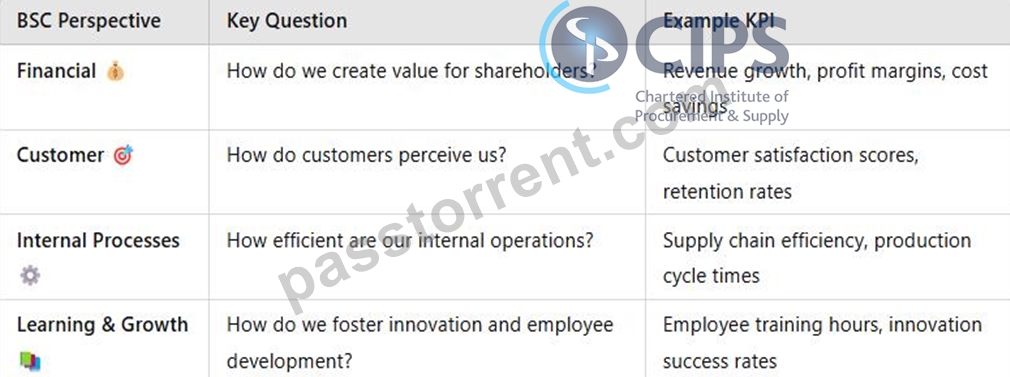
2.2 Application of BSC in Performance Measurement
✅ Holistic View: Measures financial and non-financial performance.
✅ Strategic Alignment: Ensures all departments contribute to business goals.
✅ Data-Driven Decision-Making: Provides insights for process improvements and competitive positioning.
Example:
A logistics company implementing BSC could track:
Financial: Cost per delivery
Customer: Delivery accuracy and satisfaction scores
Internal Processes: Warehouse efficiency
Learning & Growth: Employee training on automation tools
3. Advantages and Limitations of the Balanced Scorecard
✅ Advantages
✔ Aligns performance measurement with business strategy.
✔ Ensures balanced focus across financial and operational areas.
✔ Encourages continuous improvement through KPI tracking.
❌ Limitations
✖ Can be complex and time-consuming to implement.
✖ Needs regular updates to remain relevant.
✖ May require cultural change for adoption across all departments.
Conclusion
Measuring performance is essential for strategic decision-making, operational efficiency, customer satisfaction, financial stability, and continuous improvement. The Balanced Scorecard (BSC) is a powerful tool that provides a comprehensive performance assessment, helping organizations maintain a sustainable competitive advantage.
NEW QUESTION # 15
SIMULATION
Evaluate the role of strategic human management in creating competitive advantage for an organisation
Answer:
Explanation:
Evaluation of the Role of Strategic Human Resource Management (SHRM) in Creating Competitive Advantage Introduction Strategic Human Resource Management (SHRM) is the proactive alignment of HR policies with business strategy to achieve long-term success. It focuses on developing talent, leadership, culture, and employee engagement to enhance organizational performance and competitiveness.
By implementing effective SHRM practices, companies can create a sustainable competitive advantage through a highly skilled and motivated workforce.
1. The Role of SHRM in Creating Competitive Advantage
1.1 Talent Acquisition and Workforce Planning
✅ Why it matters?
Recruiting and retaining highly skilled employees is essential for innovation and efficiency.
Workforce planning ensures the right people are in the right roles at the right time.
Example: Google's strategic hiring approach focuses on attracting top AI and engineering talent, driving innovation in tech.
✅ Competitive Advantage Created:
✔ Builds an expert workforce that competitors cannot easily replicate.
✔ Reduces turnover costs by ensuring long-term retention.
1.2 Employee Development and Training
✅ Why it matters?
Continuous learning and skills development enhance employee productivity and innovation.
Upskilling employees keeps companies ahead in fast-changing industries.
Example: Amazon's Career Choice Program invests in employee training to develop future leaders and improve workforce capabilities.
✅ Competitive Advantage Created:
✔ Enhances organizational agility by equipping employees with emerging skills.
✔ Creates a culture of continuous improvement and innovation.
1.3 Performance Management and Employee Engagement
✅ Why it matters?
Effective performance management systems ensure employees align with business goals.
Engaged employees are more productive, motivated, and committed to company success.
Example: Salesforce's focus on employee engagement through leadership development and internal career growth has resulted in high retention and innovation.
✅ Competitive Advantage Created:
✔ Drives high workforce productivity and efficiency.
✔ Reduces costs related to poor performance and disengagement.
1.4 HR Technology and Data-Driven Decision-Making
✅ Why it matters?
Digital HR tools (e.g., AI-driven recruitment, performance analytics, HR automation) optimize talent management.
Data-driven HR strategies help predict workforce trends and talent gaps.
Example: Unilever uses AI-driven HR analytics to identify high-potential employees and enhance leadership succession planning.
✅ Competitive Advantage Created:
✔ Enables data-driven workforce planning for future growth.
✔ Increases efficiency and reduces hiring biases.
1.5 Employee Well-being and Diversity & Inclusion
✅ Why it matters?
Work-life balance policies, mental health support, and DEI (Diversity, Equity, Inclusion) programs improve workplace culture.
Diverse teams enhance creativity, problem-solving, and innovation.
Example: Microsoft's Diversity & Inclusion programs have strengthened its brand and innovation by fostering a more inclusive workforce.
✅ Competitive Advantage Created:
✔ Attracts top global talent who seek inclusive workplaces.
✔ Strengthens brand reputation and employee loyalty.
2. Advantages of Strategic HRM in Competitive Positioning
✅ Develops Unique Talent & Expertise - Hard for competitors to replicate.
✅ Enhances Productivity & Efficiency - Skilled, engaged employees drive better results.
✅ Supports Business Agility & Innovation - Workforce is adaptable to market changes.
✅ Builds Strong Employer Brand - Attracts and retains high-quality talent.
Key Takeaway: SHRM transforms HR from an administrative function to a strategic asset that creates long-term value.
3. Challenges & Risks of SHRM
❌ Implementation Costs - Advanced HR technology and training require investment.
❌ Resistance to Change - Employees may resist new HR policies.
❌ Measuring ROI Can Be Complex - Talent development impacts long-term but is hard to quantify.
❌ Legal & Compliance Risks - Global HR policies must align with labor laws across different countries.
Solution: Businesses must integrate HR analytics, leadership buy-in, and cultural change strategies to overcome these challenges.
4. Conclusion
Strategic Human Resource Management (SHRM) is a key driver of sustainable competitive advantage by:
✅ Attracting and retaining top talent.
✅ Developing a highly skilled, engaged, and innovative workforce.
✅ Leveraging HR technology and data-driven insights.
✅ Promoting employee well-being, diversity, and inclusion.
Companies that prioritize SHRM create a dynamic, future-ready workforce, ensuring long-term success in competitive markets.
NEW QUESTION # 16
SIMULATION
Explain the use of forward and future contracts in the commodities market
Answer:
Explanation:
Use of Forward and Futures Contracts in the Commodities Market
Introduction
The commodities market involves the trading of physical goods such as oil, gold, agricultural products, and metals. Due to price volatility, businesses and investors use derivative contracts like forward and futures contracts to manage price risk and ensure stability in supply chains.
Both contracts allow buyers and sellers to agree on a fixed price for a future date, but they differ in terms of standardization, trading methods, and risk exposure.
1. Forward Contracts (Private, Custom Agreements)
Definition
A forward contract is a customized agreement between two parties to buy or sell a commodity at a specified price on a future date. It is a private, over-the-counter (OTC) contract, meaning it is not traded on an exchange.
✅ Key Characteristics:
Customizable terms (quantity, delivery date, price).
Direct agreement between buyer and seller.
Used for hedging against price fluctuations.
Example: A coffee producer agrees to sell 10,000kg of coffee to a distributor in 6 months at a fixed price of $5 per kg, protecting both parties from price swings.
Advantages of Forward Contracts
✔ Tailored to buyer/seller needs - Customizable quantity, quality, and delivery terms.
✔ Reduces price uncertainty - Locks in a price, protecting against market fluctuations.
✔ No upfront cost - No initial margin or collateral required.
Disadvantages of Forward Contracts
❌ High counterparty risk - If one party defaults, the other may face financial losses.
❌ Not regulated or publicly traded - Higher risk of contract disputes.
❌ Limited liquidity - Harder to transfer or sell compared to futures contracts.
Best for: Companies looking for customized price protection in procurement or sales (e.g., food manufacturers, oil refineries).
2. Futures Contracts (Standardized, Exchange-Traded Agreements)
Definition
A futures contract is a standardized agreement to buy or sell a commodity at a predetermined price on a future date. These contracts are traded on organized exchanges (e.g., Chicago Mercantile Exchange (CME), London Metal Exchange (LME)).
✅ Key Characteristics:
Highly regulated and standardized (fixed contract sizes and terms).
Exchange-traded → Increased liquidity and price transparency.
Requires initial margin and daily settlements (mark-to-market system).
Example: A wheat farmer uses futures contracts on the Chicago Board of Trade (CBOT) to lock in wheat prices before harvest, avoiding potential price drops.
Advantages of Futures Contracts
✔ Lower counterparty risk - Exchanges guarantee contract settlement.
✔ High liquidity - Easily bought or sold on futures markets.
✔ Price transparency - Publicly available pricing and standardized contracts.
Disadvantages of Futures Contracts
❌ Less flexibility - Fixed contract sizes and expiration dates.
❌ Margin requirements - Traders must maintain a margin account, requiring cash reserves.
❌ Potential for speculative losses - Prices fluctuate daily, leading to possible margin calls.
Best for: Large-scale buyers/sellers, investors, and companies needing risk management in commodity markets.
3. Key Differences Between Forward and Futures Contracts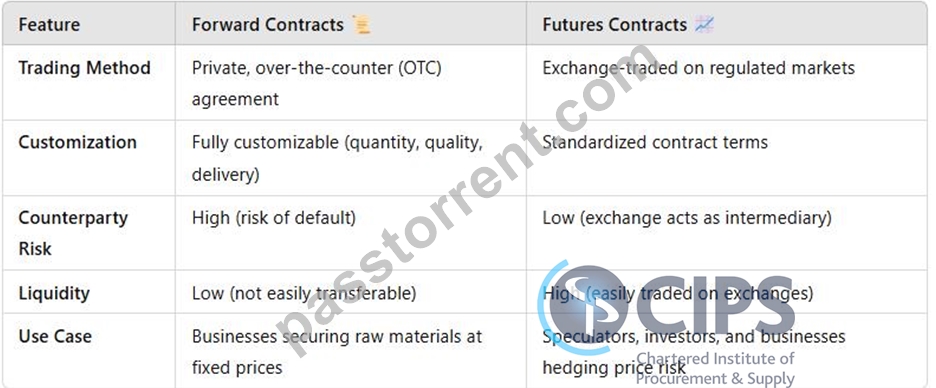
Key Takeaway: Forwards offer flexibility but higher risk, while futures provide standardization and liquidity.
4. Application of Forward and Futures Contracts in the Commodities Market Forwards Used By:
✅ Food manufacturers - Locking in wheat, sugar, or coffee prices for future production.
✅ Oil refineries - Securing crude oil prices to manage fuel costs.
✅ Mining companies - Pre-agreeing on metal prices to secure revenue streams.
Futures Used By:
✅ Airlines - Hedging against fluctuating fuel prices.
✅ Investors - Speculating on gold, oil, or agricultural prices for profit.
✅ Governments - Stabilizing national food or energy reserves.
5. Conclusion
Both forward and futures contracts are essential tools in the commodities market for price risk management.
✅ Forward contracts are customizable but riskier, making them suitable for businesses with specific procurement needs.
✅ Futures contracts offer liquidity and reduced counterparty risk, making them ideal for investors and large corporations managing price volatility.
Organizations must choose the right contract based on their risk tolerance, market exposure, and financial objectives.
NEW QUESTION # 17
SIMULATION
Using Porter's 5 Forces, describe the business environment of a company of your choice
Answer:
Explanation:
Porter's Five Forces Analysis - Business Environment of Tesla
Introduction
Porter's Five Forces Model, developed by Michael Porter, is a strategic framework used to analyze the competitive environment of an industry. It evaluates five key factors that influence a company's profitability and strategic positioning.
For this analysis, we will examine Tesla Inc., a leading electric vehicle (EV) and clean energy company, to assess its business environment using Porter's Five Forces.
1. Competitive Rivalry (High)
The automotive industry is highly competitive, with established brands and new entrants challenging Tesla's market position.
✅ Key Factors:
Traditional automakers (Toyota, BMW, Mercedes, Ford, Volkswagen, GM) are expanding into EVs.
EV-only competitors (Rivian, Lucid, NIO, BYD, Polestar) are gaining market share.
Tesla's technology (battery innovation, autonomous driving) gives it a temporary edge, but competitors are catching up.
Example: Tesla's Supercharger network gives it an advantage, but competitors like Hyundai and Ford are forming EV charging alliances to reduce Tesla's lead.
Impact: Tesla must continue innovation and brand differentiation to maintain market leadership.
2. Threat of New Entrants (Medium)
The barriers to entry in the automotive industry are high due to capital investment, brand recognition, and regulatory requirements.
✅ Key Factors:
High R&D costs for battery technology and autonomous driving deter new entrants.
Tesla's strong brand recognition makes it difficult for new brands to compete.
Government incentives and EV market growth encourage startups like Rivian and Lucid.
Manufacturing expertise required-many new EV companies struggle with scaling production.
Example: Apple planned to enter the EV market but faced challenges in battery sourcing and technology.
Impact: While Tesla faces some risk from new startups, its established brand, patents, and economies of scale help protect its position.
3. Bargaining Power of Suppliers (Low to Medium)
Tesla relies on specialized components and raw materials (e.g., lithium, cobalt, semiconductors) for battery production.
✅ Key Factors:
Tesla has vertically integrated its supply chain, producing in-house batteries (Gigafactories).
Raw material suppliers (e.g., lithium mining companies) hold some bargaining power due to limited global supply.
Semiconductor shortages have impacted Tesla and the auto industry as a whole.
Tesla has long-term contracts with key suppliers, reducing dependency risks.
Example: Tesla sources batteries from Panasonic, CATL, and LG Chem, but it is developing its own battery technology (4680 cells) to reduce reliance on third parties.
Impact: Tesla's vertical integration strategy lowers supplier power, but raw material scarcity remains a challenge.
4. Bargaining Power of Buyers (Medium)
Customers have more choices in the EV market, but Tesla's brand loyalty and product differentiation give it an advantage.
✅ Key Factors:
Consumers compare Tesla against competitors based on price, range, and features.
Tesla's strong brand and innovation (Autopilot, long-range batteries, Supercharger network) reduce customer switching.
As more automakers enter the EV market, customers gain more bargaining power.
Price-sensitive buyers may opt for lower-cost EVs from brands like BYD and Nissan.
Example: Tesla's Model 3 dominates the EV market, but new affordable EVs from Volkswagen and Hyundai give buyers alternatives.
Impact: Tesla must continuously innovate and expand its product range to retain market dominance.
5. Threat of Substitutes (Low to Medium)
Substitutes for Tesla's products include public transportation, hybrid vehicles, and alternative energy solutions.
✅ Key Factors:
Hybrid cars remain an option for customers who are not ready for full EV adoption.
Public transportation and ride-sharing services reduce the need for personal car ownership.
Fuel cell and hydrogen-powered vehicles could emerge as alternatives in the long term.
Example: Toyota is investing in hydrogen fuel cell vehicles (Mirai), presenting an alternative to battery EVs.
Impact: While substitutes exist, Tesla's unique market positioning and growing EV adoption reduce this threat.
Conclusion
Porter's Five Forces analysis shows that Tesla operates in a highly competitive environment, facing challenges from rival EV makers, supplier dependencies, and increasing buyer power. However, its innovation, brand strength, and vertical integration strategy provide a strong competitive advantage.
To sustain growth, Tesla must:
✅ Continue investing in battery technology and AI-driven autonomous driving.
✅ Expand affordable EV options to compete with lower-cost brands.
✅ Strengthen supplier relationships to mitigate raw material shortages.
NEW QUESTION # 18
SIMULATION
Discuss supply and demand factors in foreign exchange
Answer:
Explanation:
Supply and Demand Factors in Foreign Exchange
Introduction
The foreign exchange (Forex) market operates on the fundamental principle of supply and demand, which determines currency values. When demand for a currency rises, its value appreciates, while an oversupply causes depreciation.
Several factors influence the supply and demand of foreign currencies, including interest rates, inflation, trade balances, investor sentiment, and geopolitical events.
This answer explores the key supply and demand factors in Forex markets and how they impact exchange rates.
1. Demand Factors in Foreign Exchange (What Increases Demand for a Currency?)
1.1 Interest Rate Differentials (Higher Interest Rates Attract Capital Inflows)
✅ Why It Affects Demand?
Investors seek higher returns on savings and investments.
Higher interest rates increase demand for the country's currency.
Example:
When the US Federal Reserve raises interest rates, the US dollar (USD) strengthens as global investors buy USD-denominated assets.
Key Takeaway: Countries with higher interest rates attract more investors, increasing currency demand.
1.2 Inflation Rates (Low Inflation Strengthens Currency Demand)
✅ Why It Affects Demand?
Lower inflation preserves purchasing power, making the currency more attractive.
High inflation erodes currency value, reducing demand.
Example:
The Swiss Franc (CHF) remains strong due to Switzerland's low inflation and economic stability.
In contrast, Turkey's Lira (TRY) depreciated due to high inflation, reducing investor confidence.
Key Takeaway: Stable inflation rates encourage demand for a currency, while high inflation weakens it.
1.3 Trade Balance & Current Account Surplus (Export-Led Demand for a Currency)
✅ Why It Affects Demand?
A trade surplus (exports > imports) increases demand for a country's currency.
Foreign buyers need the country's currency to pay for goods and services.
Example:
China's trade surplus increases demand for the Chinese Yuan (CNY) as global buyers purchase Chinese goods.
Germany's strong exports strengthen the Euro (EUR) due to high international trade.
Key Takeaway: Exporting nations experience higher currency demand, boosting value.
1.4 Investor Confidence & Speculation (Market Sentiment Drives Demand)
✅ Why It Affects Demand?
If investors expect a currency to appreciate, they buy more of it.
Safe-haven currencies see increased demand during global uncertainty.
Example:
Gold and the US Dollar (USD) strengthen during economic crises, as investors seek stability.
Brexit uncertainty weakened the British Pound (GBP) as investors speculated on UK economic instability.
Key Takeaway: Market psychology and speculation can drive short-term demand for a currency.
2. Supply Factors in Foreign Exchange (What Increases the Supply of a Currency?)
2.1 Central Bank Monetary Policy (Money Supply & Interest Rate Adjustments)
✅ Why It Affects Supply?
Central banks control currency supply through interest rates and money printing.
Loose monetary policy (low rates, quantitative easing) increases money supply, depreciating currency.
Example:
The European Central Bank (ECB) lowered interest rates and introduced stimulus packages, increasing the supply of Euros (EUR).
The Bank of Japan's low-interest rates increased the supply of Japanese Yen (JPY), making it weaker.
Key Takeaway: More money supply weakens a currency, while tight monetary policy strengthens it.
2.2 Government Debt & Fiscal Policy (Higher Debt Increases Currency Supply)
✅ Why It Affects Supply?
Countries with high national debt may increase money supply to cover obligations.
High debt reduces investor confidence, increasing supply as investors sell off the currency.
Example:
The US dollar saw increased supply during the 2008 financial crisis due to stimulus packages.
Argentina's peso weakened as government debt rose, increasing peso supply in markets.
Key Takeaway: High government debt can lead to more currency supply and depreciation.
2.3 Foreign Exchange Reserves & Currency Intervention (Central Banks Selling Currency to Manage Value)
✅ Why It Affects Supply?
Central banks buy/sell their currency to stabilize exchange rates.
Selling reserves increases currency supply, reducing its value.
Example:
China's central bank occasionally sells Yuan (CNY) to keep it competitive in global markets.
Switzerland's central bank has intervened to weaken the Swiss Franc (CHF) to support exports.
Key Takeaway: Governments manipulate currency supply to stabilize economic conditions.
2.4 Import Demand & Trade Deficits (More Imports Increase Currency Supply)
✅ Why It Affects Supply?
A trade deficit (imports > exports) increases supply of local currency in global markets.
Importers exchange local currency for foreign currency, increasing supply.
Example:
The US has a persistent trade deficit, increasing the supply of US dollars in foreign exchange markets.
The UK's reliance on imports has contributed to GBP fluctuations.
Key Takeaway: Countries with trade deficits see higher currency supply, leading to depreciation.
3. Interaction of Supply & Demand in Foreign Exchange Markets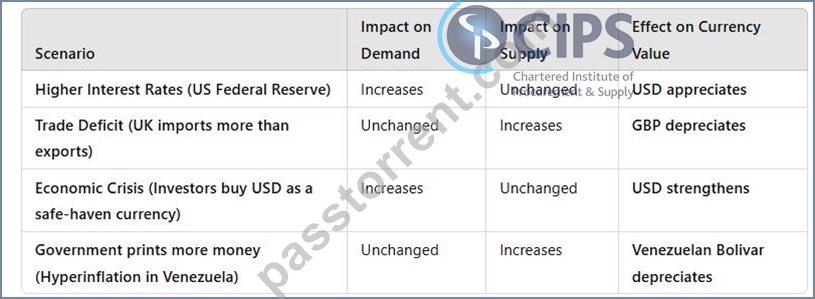
Key Takeaway: Exchange rates fluctuate based on the balance between supply and demand.
4. Conclusion
The foreign exchange market operates based on supply and demand dynamics, influenced by:
✅ Demand Factors:
Interest Rates & Inflation - Higher rates strengthen demand.
Trade Balances - Export-driven economies see strong demand.
Investor Sentiment - Economic stability attracts investors.
✅ Supply Factors:
Central Bank Policies - Money printing increases supply.
Government Debt - High debt increases supply, lowering value.
Trade Deficits - Import-heavy economies see currency depreciation.
Understanding these factors helps businesses and policymakers manage foreign exchange risks and optimize international trade strategies.
NEW QUESTION # 19
SIMULATION
Provide a definition of a commodity product. What role does speculation and hedging play in the commodities market?
Answer:
Explanation:
Commodity Products and the Role of Speculation & Hedging in the Commodities Market
1. Definition of a Commodity Product
A commodity product is a raw material or primary agricultural product that is uniform in quality and interchangeable with other products of the same type, regardless of the producer.
✅ Key Characteristics:
Standardized and homogeneous - Little differentiation between producers.
Traded on global markets - Bought and sold on commodity exchanges.
Price determined by supply & demand - Subject to market fluctuations.
Examples of Commodity Products:
Agricultural Commodities - Wheat, corn, coffee, cotton.
Energy Commodities - Crude oil, natural gas, coal.
Metals & Minerals - Gold, silver, copper, aluminum.
Key Takeaway: Commodities are essential goods used in global trade, where price is the primary competitive factor.
2. The Role of Speculation in the Commodities Market
Definition
Speculation involves buying and selling commodities for profit rather than for actual use, based on price predictions.
✅ How Speculation Works:
Traders and investors buy commodities expecting price increases (long positions).
They sell commodities expecting price declines (short positions).
No physical exchange of goods-transactions are purely financial.
Example:
A trader buys crude oil futures at $70 per barrel, expecting prices to rise. If oil reaches $80 per barrel, the trader sells for profit.
Advantages of Speculation
✔ Increases market liquidity - More buyers and sellers improve trading efficiency.
✔ Enhances price discovery - Helps determine fair market value.
✔ Absorbs market risk - Speculators take risks that producers or consumers avoid.
Disadvantages of Speculation
❌ Creates excessive volatility - Large speculative trades can cause price spikes or crashes.
❌ Detaches prices from real supply and demand - Can inflate bubbles or cause artificial declines.
❌ Market manipulation risks - Speculators with large holdings can distort prices.
Key Takeaway: Speculation adds liquidity and helps price discovery, but can lead to extreme volatility if unchecked.
3. The Role of Hedging in the Commodities Market
Definition
Hedging is a risk management strategy used by commodity producers and consumers to protect against price fluctuations.
✅ How Hedging Works:
Producers (e.g., farmers, oil companies) use futures contracts to lock in a price for future sales, reducing the risk of price drops.
Consumers (e.g., airlines, food manufacturers) hedge to secure stable input costs, avoiding sudden price surges.
Example:
An airline hedges against rising fuel costs by buying fuel futures at a fixed price for the next 12 months. If fuel prices rise, the airline is protected from increased expenses.
Advantages of Hedging
✔ Stabilizes revenue and costs - Helps businesses plan with certainty.
✔ Protects against price swings - Reduces exposure to unpredictable market conditions.
✔ Encourages long-term investment - Producers and buyers operate with confidence.
Disadvantages of Hedging
❌ Reduces potential profits - If prices move favorably, hedgers miss out on gains.
❌ Contract obligations - Hedgers must honor contract terms, even if market prices improve.
❌ Hedging costs - Fees and contract costs can be high.
Key Takeaway: Hedging protects businesses from commodity price risk, ensuring stable revenue and cost control.
4. Speculation vs. Hedging: Key Differences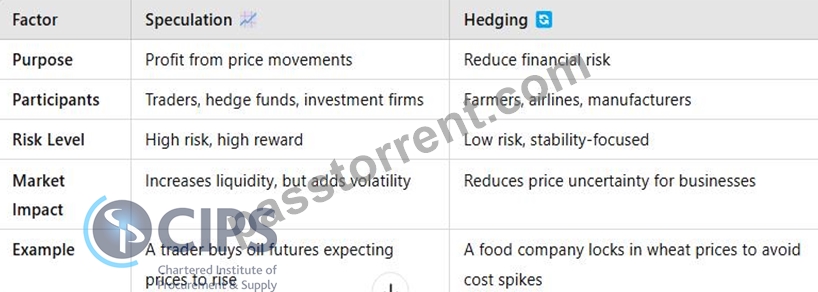
Key Takeaway: Speculation seeks profit from price changes, while hedging minimizes risk from price fluctuations.
5. Conclusion
✅ Commodity products are standardized raw materials traded globally, with prices driven by supply and demand dynamics.
✅ Speculation brings liquidity and price discovery but can increase volatility.
✅ Hedging helps businesses stabilize costs and revenues, ensuring financial predictability.
✅ Both strategies play essential roles in ensuring a balanced, functional commodities market.
NEW QUESTION # 20
SIMULATION
Discuss how XYZ, a global beverage manufacturing organisation, could use the Boston Consultancy Group Framework to impact upon strategic decision making Introduction The Boston Consulting Group (BCG) Matrix is a strategic tool used by organizations to analyze their product portfolio and allocate resources effectively. It classifies products into four categories-Stars, Cash Cows, Question Marks, and Dogs-based on market growth rate and market share.
As a global beverage manufacturing organization, XYZ can use the BCG Matrix to evaluate its product range, identify growth opportunities, and make informed strategic decisions.
1. Explanation of the BCG Matrix
The BCG Matrix is divided into four quadrants: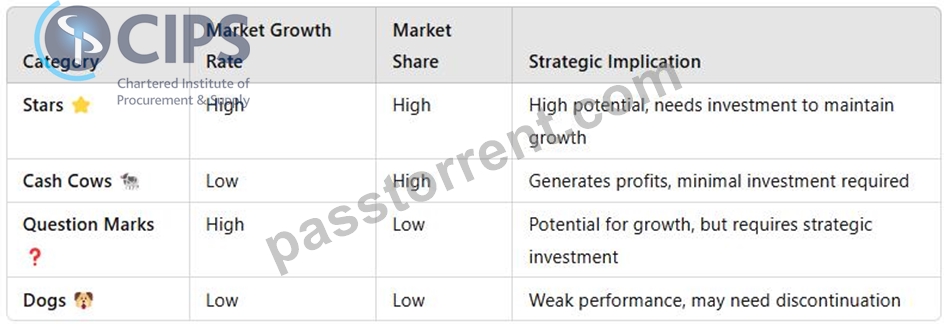
Example for XYZ:
Star: A fast-growing energy drink brand in emerging markets.
Cash Cow: A flagship cola product with stable market demand.
Question Mark: A new functional health drink with uncertain market acceptance.
Dog: An underperforming diet soda variant with declining sales.
2. How XYZ Can Use the BCG Matrix for Strategic Decision-Making
XYZ can use the BCG Matrix to make resource allocation and investment decisions based on product performance.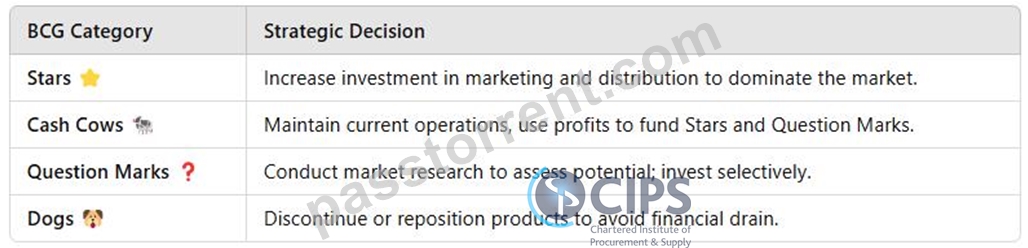
3. Advantages of Using the BCG Matrix for XYZ
✅ Resource Allocation - Helps prioritize investment in high-growth products.
✅ Strategic Focus - Identifies which products to grow, maintain, or phase out.
✅ Market Adaptation - Helps XYZ adjust its beverage portfolio based on changing consumer trends.
Example: If XYZ's energy drink (a Star) is experiencing high growth, more marketing and production investment may be justified.
4. Limitations of the BCG Matrix
❌ Ignores Market Competition - A product may have a high market share, but competition could still impact profitability.
❌ Simplistic Assumptions - Not all products neatly fit into one category; market dynamics are complex.
❌ Focuses on Growth and Share Only - It does not consider external factors like profit margins, customer loyalty, or brand strength.
Example: A Question Mark product might have potential, but if consumer preferences shift, it may never become a Star.
5. Application of the BCG Matrix in the Beverage Industry
XYZ can apply the BCG Matrix by reviewing its entire product portfolio across different geographic markets.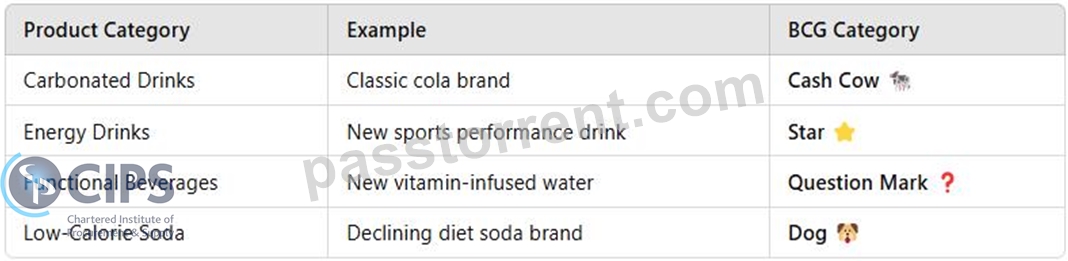
Conclusion
The BCG Matrix is a valuable strategic tool for XYZ to analyze its product portfolio, prioritize investments, and make informed market-based decisions. However, it should be used alongside other strategic models (e.g., PESTLE, VRIO) to ensure a comprehensive business strategy.
Answer:
Explanation:
Boston Consulting Group (BCG) Matrix and Strategic Decision-Making for XYZ
NEW QUESTION # 21
SIMULATION
Describe and evaluate the use of the VRIO Framework in understanding the internal resources and competencies of an organisation.
Answer:
Explanation:
The VRIO Framework: Understanding Internal Resources and Competencies
The VRIO Framework is a strategic analysis tool used to assess an organization's internal resources and competencies to determine whether they provide a sustainable competitive advantage. Developed by Jay Barney, VRIO stands for Value, Rarity, Imitability, and Organization.
1. Explanation of the VRIO Framework
The VRIO model evaluates whether a firm's resources and capabilities contribute to a sustained competitive advantage.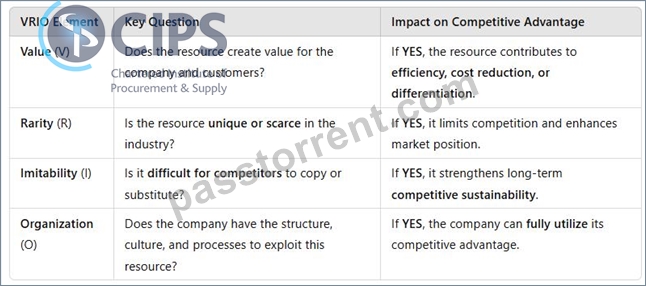
Example: Apple's software ecosystem (iOS, App Store) is valuable, rare, hard to imitate, and well-organized, giving it a sustainable competitive advantage.
2. The Use of VRIO in Assessing Internal Resources and Competencies
Companies use the VRIO framework to identify which resources provide temporary or sustainable competitive advantages.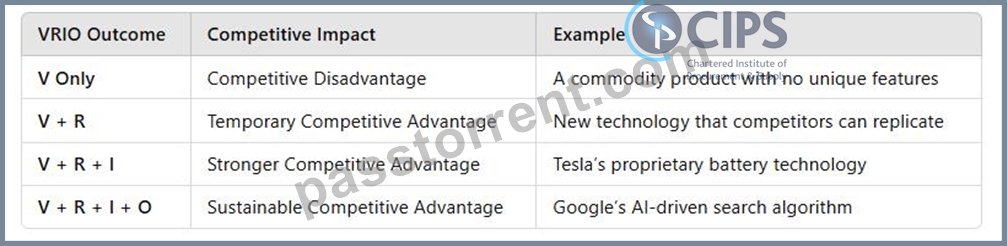
3. Advantages of Using VRIO in Strategic Decision-Making
✅ Identifies Core Competencies - Helps organizations focus on key strengths that drive long-term success.
✅ Guides Investment Decisions - Encourages businesses to invest in resources that are difficult to imitate.
✅ Improves Competitive Strategy - Helps firms differentiate between short-term vs. long-term advantages.
Example: Coca-Cola's brand equity is VRIO-positive, making it difficult for new entrants to replicate.
4. Limitations of the VRIO Framework
❌ Ignores External Factors - Unlike PESTLE or Porter's Five Forces, VRIO does not account for market conditions or regulatory changes.
❌ Subjectivity in Resource Evaluation - Assessing whether a resource is truly valuable or rare can be complex.
❌ Lack of Actionable Steps - VRIO identifies competitive strengths but does not provide strategies for leveraging them.
Example: A company may identify a rare talent pool, but poor organizational structure (O) can prevent it from leveraging this advantage.
5. Application of VRIO in Business Strategy
Businesses across different industries use VRIO to assess their internal strengths: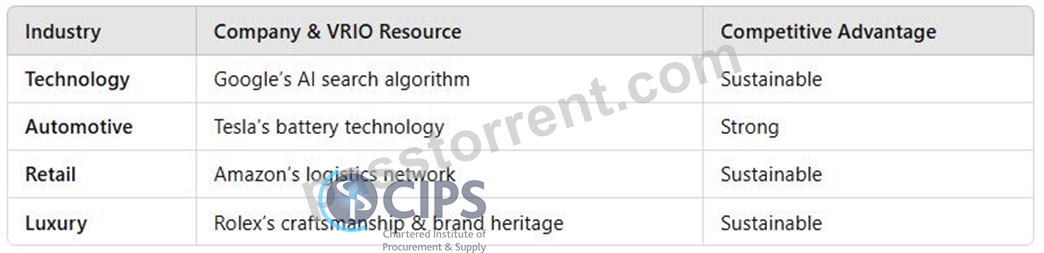
Conclusion
The VRIO Framework is a valuable tool for evaluating internal resources and capabilities, allowing businesses to identify sustainable competitive advantages. However, it should be used alongside external analysis tools (e.g., PESTLE, SWOT) to ensure a comprehensive strategic assessment.
NEW QUESTION # 22
SIMULATION
XYZ is a high fashion clothing designer and wishes to complete a benchmarking exercise. Discuss priority dimensions to be measured in the benchmarking exercise and propose a strategy for completing the exercise
Answer:
Explanation:
Benchmarking Exercise for XYZ - A High Fashion Clothing Designer
Introduction
Benchmarking is a strategic performance measurement tool that helps businesses compare their processes, products, and strategies with industry leaders to identify areas for improvement.
As a high fashion clothing designer, XYZ must focus on key priority dimensions such as product quality, supply chain efficiency, sustainability, brand positioning, and customer engagement. A structured benchmarking strategy ensures that XYZ can achieve competitive advantage, optimize operations, and align with industry best practices.
1. Priority Dimensions to be Measured in Benchmarking
XYZ should focus on the following five key benchmarking dimensions to enhance its competitiveness in the luxury fashion market:
1. Product Quality and Design Innovation
✅ Why it's important?
High fashion brands compete on premium materials, craftsmanship, and exclusivity.
Quality affects brand reputation, pricing strategy, and customer loyalty.
Example: XYZ can benchmark against Gucci or Chanel by comparing fabric sourcing, production techniques, and unique design elements.
2. Supply Chain Efficiency and Lead Times
✅ Why it's important?
Speed-to-market is critical in high fashion, especially for seasonal collections.
Efficient supply chains reduce costs and enhance inventory management.
Example: Zara benchmarks against luxury brands to optimize supply chains while maintaining affordability.
Key Metrics to Benchmark:
Supplier lead times (raw materials to finished goods).
Production cycle time (design to retail store).
Logistics and distribution efficiency.
3. Brand Positioning and Market Perception
✅ Why it's important?
A high fashion brand's success depends on prestige, exclusivity, and perceived value.
Benchmarking against top competitors helps XYZ maintain a premium brand image.
Example: XYZ can compare its marketing strategies, social media presence, and celebrity endorsements with Louis Vuitton or Dior.
Key Metrics to Benchmark:
Brand awareness and perception (customer surveys).
Pricing strategy compared to competitors.
Effectiveness of marketing campaigns and influencer collaborations.
4. Sustainability and Ethical Sourcing
✅ Why it's important?
Consumers expect eco-friendly, ethically produced fashion.
Sustainable brands gain a competitive edge and attract Gen Z and millennial buyers.
Example: Stella McCartney's ethical fashion model is a benchmark for sustainable materials and responsible sourcing.
Key Metrics to Benchmark:
Use of sustainable materials (organic, recycled fabrics).
Ethical supplier compliance with fair labor practices.
Carbon footprint reduction in production and logistics.
5. Customer Engagement and Experience
✅ Why it's important?
Luxury brands thrive on personalized customer experiences and loyalty programs.
Omnichannel retail (physical stores + digital platforms) enhances sales and retention.
Example: Burberry's digital transformation provides a seamless luxury online shopping experience.
Key Metrics to Benchmark:
Online vs. in-store customer engagement levels.
AI-driven personalization in e-commerce.
Customer service responsiveness and return policies.
2. Proposed Strategy for Completing the Benchmarking Exercise
To complete the benchmarking process successfully, XYZ should follow a structured benchmarking approach using the 5-step process:
Step 1: Identify Benchmarking Objectives
Define what XYZ wants to achieve (e.g., reducing lead times, improving sustainability).
Select benchmarking partners (competitors, industry leaders, cross-industry comparisons).
Step 2: Data Collection & Research
Use primary and secondary research to gather data:
Primary Research: Surveys, interviews, supplier audits.
Secondary Research: Competitor reports, industry data, fashion indexes.
Example: Studying annual sustainability reports from high fashion brands to benchmark against sustainability best practices.
Step 3: Analyze Performance Gaps
Compare XYZ's current performance metrics with industry benchmarks.
Identify gaps and improvement opportunities (e.g., faster supply chain, better brand marketing).
Example Analysis:
XYZ's supply chain lead time = 60 days vs. benchmark brand = 30 days → Strategy needed for optimization.
Step 4: Develop and Implement Improvement Strategies
Set SMART objectives (Specific, Measurable, Achievable, Relevant, Time-bound).
Adjust supply chain processes, brand positioning, marketing strategies, and customer experience initiatives.
Example Action Plan:
Supply Chain: Partner with local European suppliers to reduce lead times.
Sustainability: Introduce organic cotton & cruelty-free leather in the next collection.
Step 5: Continuous Monitoring and Review
Regularly review benchmarking outcomes.
Adjust strategies to remain competitive in the evolving high fashion market.
Example: Chanel adapts marketing campaigns every season to maintain exclusivity and desirability.
Conclusion
Benchmarking allows XYZ to measure product quality, supply chain efficiency, brand positioning, sustainability, and customer engagement against high fashion industry leaders. A structured 5-step benchmarking process ensures that XYZ continuously improves its strategic performance and maintains a competitive edge.
NEW QUESTION # 23
SIMULATION
Currency Options and Currency Swaps are instruments used in foreign exchange. Explain the advantages of using these derivatives compared to the use of spot transactions
Answer:
Explanation:
Comparison of Currency Options, Currency Swaps, and Spot Transactions in Foreign Exchange Introduction In international trade and finance, companies dealing with foreign currencies use various financial instruments to manage exchange rate risks. The three main instruments are:
Currency Options - Provide the right (but not obligation) to exchange currency at a fixed rate in the future.
Currency Swaps - A contract to exchange currency flows over a set period.
Spot Transactions - A simple immediate currency exchange based on the current market rate.
While spot transactions offer simplicity, currency options and swaps provide better risk management and flexibility.
1. Currency Options (Flexible Risk Management Tool)
Definition
A currency option gives the holder the right, but not the obligation, to exchange a currency at a predetermined rate on or before a specific date.
✅ Types of Options:
Call Option - Right to buy a currency at a fixed rate.
Put Option - Right to sell a currency at a fixed rate.
Example: A UK importer buying goods from the US purchases a GBP/USD call option to protect against an increase in the exchange rate.
Advantages of Currency Options Over Spot Transactions
✔ Risk Protection - Protects against adverse currency movements while maintaining upside potential.
✔ Flexibility - No obligation to execute the transaction if the exchange rate is favorable.
✔ Ideal for Hedging Future Payments - Useful for businesses with uncertain future cash flows in foreign currencies.
❌ Disadvantages
✖ Premium Costs - Buying options requires upfront payment.
✖ Complexity - More sophisticated than spot transactions.
Best for: Businesses managing currency risk with unpredictable payment schedules.
2. Currency Swaps (Long-Term Hedging Solution)
Definition
A currency swap is a contract between two parties to exchange currency flows over a set period at a predetermined rate.
✅ How It Works:
Companies exchange principal and interest payments in different currencies.
Used to secure long-term financing in foreign markets.
Example: A UK company with a loan in USD enters a GBP/USD swap with a US firm to exchange interest payments, reducing exchange rate risk.
Advantages of Currency Swaps Over Spot Transactions
✔ Long-Term Stability - Protects businesses from long-term exchange rate fluctuations.
✔ Cost Efficiency - Often cheaper than converting currency via spot transactions repeatedly.
✔ Reduces Interest Rate Risk - Useful for companies with foreign currency debt obligations.
❌ Disadvantages
✖ Less Flexible Than Options - The swap contract must be followed as agreed.
✖ Counterparty Risk - Dependent on the financial stability of the other party.
Best for: Companies with long-term foreign currency liabilities (e.g., loans, international contracts).
3. Spot Transactions (Immediate Currency Exchange, No Hedging)
Definition
A spot transaction is a straightforward exchange of currency at the current market rate for immediate settlement (usually within two days).
Example: A European exporter receiving USD payment converts it immediately into EUR using a spot transaction.
Limitations Compared to Derivatives (Options & Swaps)
❌ No Risk Protection - Subject to daily exchange rate volatility.
❌ Not Suitable for Future Obligations - Cannot hedge against expected payments or receipts.
❌ Higher Costs for Frequent Transactions - Repeated spot trades incur forex fees and spread costs.
Best for: Small businesses or one-time transactions with no currency risk concerns.
4. Comparison Table: Currency Options, Swaps, and Spot Transactions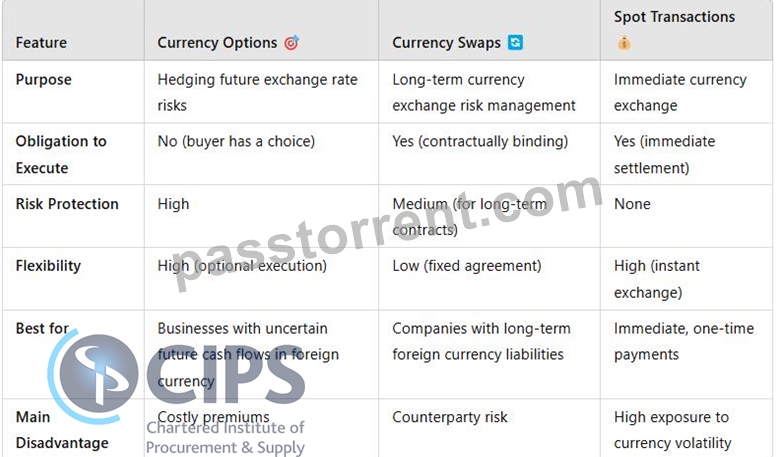
Key Takeaway:
Currency options offer flexibility and protection but come at a cost.
Currency swaps provide long-term stability for large corporations.
Spot transactions are simple but expose businesses to market fluctuations.
5. Conclusion & Best Recommendation
For businesses engaged in international trade, investments, or loans, using currency options and swaps is superior to spot transactions, as they provide:
✅ Protection from exchange rate volatility.
✅ Cost efficiency for large or recurring transactions.
✅ Better financial planning and risk management.
Best Choice Based on Business Needs:
For short-term flexibility → Currency Options
For long-term contracts or loans → Currency Swaps
For one-time currency exchange → Spot Transactions
By selecting the right derivative instrument, businesses can reduce foreign exchange risk and improve financial stability.
NEW QUESTION # 24
SIMULATION
Compare and contrast an aggressive and conservative approach to business funding.
Answer:
Explanation:
Comparison of Aggressive vs. Conservative Business Funding Approaches
Introduction
Businesses adopt different funding strategies based on their risk tolerance, growth objectives, and financial stability. Two contrasting approaches to business funding are:
Aggressive Funding Approach - Focuses on high-risk, high-reward strategies with more debt and short-term financing to fuel rapid expansion.
Conservative Funding Approach - Emphasizes financial stability, risk aversion, and long-term security, often relying on equity and retained earnings to fund operations.
Each approach has advantages and risks, influencing a company's liquidity, cost of capital, and financial sustainability.
1. Aggressive Business Funding Approach (High Risk, High Reward)
Definition
An aggressive funding strategy involves maximizing short-term debt, high leverage, and minimal cash reserves to accelerate growth and expansion.
✅ Key Characteristics:
Relies heavily on debt financing (bank loans, corporate bonds, short-term credit).
Prioritizes rapid growth and high returns over financial security.
Uses minimal equity financing to avoid ownership dilution.
Maintains low cash reserves, assuming cash flows will cover liabilities.
Example:
Startups and tech firms (e.g., Tesla, Uber, Amazon in early years) often borrow aggressively to scale rapidly.
Private equity firms fund acquisitions using high leverage to maximize returns.
Advantages of Aggressive Funding
✔ Faster business expansion - Capital is readily available for investments.
✔ Higher return potential - More funds are allocated to revenue-generating activities.
✔ Lower equity dilution - Existing shareholders maintain control as funding is primarily debt-based.
Disadvantages of Aggressive Funding
❌ High financial risk - Heavy debt increases vulnerability to economic downturns.
❌ Liquidity problems - Low cash reserves can cause issues during slow revenue periods.
❌ Higher borrowing costs - Lenders charge higher interest due to the risk involved.
Best for: Fast-growing companies, high-risk industries, and businesses with predictable cash flows.
2. Conservative Business Funding Approach (Low Risk, Long-Term Stability) Definition A conservative funding strategy focuses on low debt levels, high liquidity, and long-term financing to ensure financial stability and steady growth.
✅ Key Characteristics:
Uses retained earnings and equity financing over debt.
Minimizes reliance on short-term credit to avoid financial pressure.
Maintains high cash reserves for financial security.
Focuses on steady, sustainable growth rather than rapid expansion.
Example:
Berkshire Hathaway (Warren Buffett's company) follows a conservative funding model, relying on retained earnings rather than excessive debt.
Family-owned businesses often prioritize financial stability over rapid expansion.
Advantages of Conservative Funding
✔ Lower financial risk - Reduces dependence on external creditors.
✔ Stable cash flow - Ensures business continuity during economic downturns.
✔ Better credit rating - Stronger financial health allows for lower borrowing costs if needed.
Disadvantages of Conservative Funding
❌ Slower business growth - Limited access to capital can restrict expansion.
❌ Missed market opportunities - Competitors with aggressive funding may outpace the company.
❌ Higher cost of capital - Equity financing (selling shares) dilutes ownership and reduces profit per share.
Best for: Established businesses, risk-averse industries, and companies focusing on long-term sustainability.
3. Comparison Table: Aggressive vs. Conservative Funding Approaches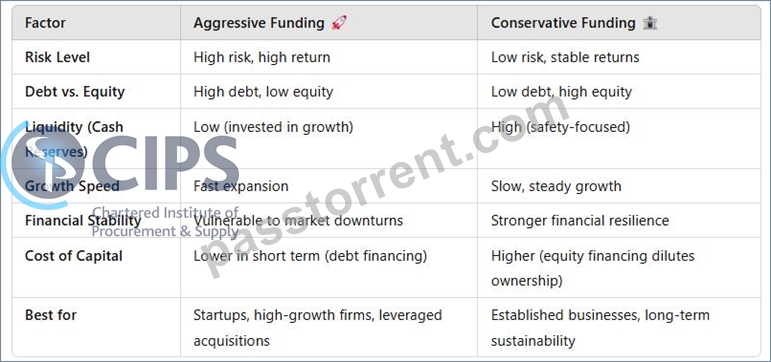
Key Takeaway: The best funding approach depends on industry, company stage, and risk appetite.
4. Which Approach Should a Business Use?
✅ Aggressive Approach is Ideal For:
Startups & High-Growth Companies - Need fast capital to capture market share.
Businesses in Competitive Markets - Companies that must outpace rivals through aggressive expansion.
Private Equity & Leveraged Buyouts - Maximizing returns through high debt strategies.
✅ Conservative Approach is Ideal For:
Mature & Stable Businesses - Companies prioritizing steady revenue and financial security.
Family-Owned Enterprises - Owners prefer low debt and long-term growth.
Risk-Averse Industries - Businesses in essential goods/services sectors where stability is more important than rapid expansion.
Hybrid Approach: The Best of Both Worlds?
Many businesses use a combination of both approaches, leveraging debt for growth while maintaining financial stability through retained earnings and equity.
Example:
Apple used a conservative strategy in its early years but adopted aggressive funding for global expansion post-2010.
5. Conclusion
The choice between aggressive and conservative funding depends on a company's growth goals, financial risk tolerance, and industry conditions.
✅ Aggressive funding maximizes short-term growth but increases financial risk.
✅ Conservative funding ensures stability but limits expansion speed.
✅ Most companies use a hybrid model to balance growth and financial security.
Understanding these approaches helps businesses optimize capital structure, manage risk, and align financing with strategic objectives.
NEW QUESTION # 25
SIMULATION
Discuss how the following can impact upon supply chain operations and business strategy:
1) Discrimination, equality and diversity
2) Redundancy and dismissal
3) Working time and payment
Answer:
Explanation:
Impact of Employment Policies on Supply Chain Operations and Business Strategy Introduction Employment policies such as discrimination, equality and diversity, redundancy and dismissal, and working time and payment have a significant impact on supply chain operations and business strategy. These factors influence employee productivity, legal compliance, reputation, and operational efficiency.
For businesses operating in global supply chains, ensuring compliance with employment laws and ethical workforce practices is crucial to maintaining sustainability, cost efficiency, and risk management.
1. Impact of Discrimination, Equality, and Diversity on Supply Chain Operations and Business Strategy Discrimination laws and diversity and inclusion (D&I) policies ensure fair treatment in the workplace.
✅ Impact on Supply Chain Operations
Companies must prevent workplace discrimination across hiring, promotions, and supplier engagement.
Non-compliance with equality laws can lead to legal penalties, reputational damage, and operational disruptions.
Supply chain leaders must promote diverse supplier partnerships and inclusive hiring practices.
Example: Many multinational corporations, such as Unilever and IBM, have supplier diversity programs that prioritize working with minority-owned and women-owned businesses.
✅ Impact on Business Strategy
Encourages innovation and diverse perspectives in problem-solving.
Enhances brand reputation and customer loyalty through ethical business practices.
Helps businesses attract top global talent by fostering an inclusive workplace.
Strategic Action: Businesses should implement anti-discrimination training and diversity recruitment strategies to create a fair and inclusive work environment.
2. Impact of Redundancy and Dismissal on Supply Chain Operations and Business Strategy Redundancy and dismissal policies regulate how companies terminate employment due to economic downturns, automation, or restructuring.
✅ Impact on Supply Chain Operations
Workforce reductions can disrupt production schedules and supplier relationships.
Companies must ensure fair redundancy policies to prevent legal claims or industrial action.
Automation may lead to worker displacement, requiring retraining programs.
Example: Ford's decision to restructure operations in the UK resulted in job losses, requiring compliance with UK redundancy laws and union negotiations.
✅ Impact on Business Strategy
Must balance cost-cutting measures with employee morale and brand reputation.
Need to comply with national and international labor laws to avoid legal action.
Investing in employee retraining and redeployment can reduce negative effects of redundancy.
Strategic Action: Businesses should establish clear redundancy frameworks, provide severance packages, and offer outplacement support for affected employees.
3. Impact of Working Time and Payment on Supply Chain Operations and Business Strategy Working time regulations and fair wage policies impact labor costs, productivity, and compliance.
✅ Impact on Supply Chain Operations
Ensuring compliance with working time laws (e.g., UK Working Time Regulations 1998) prevents overworking employees.
Failure to meet minimum wage and overtime regulations can lead to legal disputes.
Supply chains must ensure fair pay for workers in offshore factories to meet ethical sourcing standards.
Example: The UK National Minimum Wage Act ensures fair wages, while the Modern Slavery Act (2015) prevents exploitation in global supply chains.
✅ Impact on Business Strategy
Fair wages enhance employee motivation and reduce turnover.
Complying with wage and hour laws prevents reputational risks and fines.
Ethical pay practices attract conscious consumers and investors.
Strategic Action: Businesses should conduct regular wage audits and ensure global supplier compliance with fair labor laws.
Conclusion
Employment policies related to discrimination, redundancy, and working time/pay significantly impact supply chain operations and business strategy. Companies must ensure:
✅ Diversity and equality policies to foster innovation and enhance reputation.
✅ Ethical redundancy and dismissal processes to maintain legal compliance.
✅ Fair wages and working hours to improve productivity and worker well-being.
By aligning HR policies with supply chain strategy, businesses can enhance efficiency, reduce risks, and build a sustainable competitive advantage.
NEW QUESTION # 26
......
CIPS L6M2 Exam Syllabus Topics:
| Topic | Details |
|---|---|
| Topic 1 |
|
| Topic 2 |
|
| Topic 3 |
|
| Topic 4 |
|
L6M2 exam questions for practice in 2025 Updated 40 Questions: https://www.passtorrent.com/L6M2-latest-torrent.html
L6M2 Exam Dumps Pass with Updated Tests Dumps: https://drive.google.com/open?id=1sIZrYC3iZzFAJX7Iy5cAOcwvqdNCQOb8